A Practical Comparison: Natural vs. Organic Mattresses
The terms “natural” and “organic” often surface in mattress marketing, but translating them into everyday decision-making requires clarity. Natural mattresses emphasize the use of naturally derived materials, sometimes without formal organic certification. Organic mattresses, by contrast, typically adhere to strict standards for organic content, processing, and textile integrity, with verifiable certifications such as GOTS and GOLS.
In small spaces, the impact of these distinctions often centers on comfort, durability, and care. Organic wool, for instance, can be a natural flame barrier, reducing the need for chemical flame retardants that can off-gas in enclosed rooms. Latex cores—whether Dunlop or Talalay—offer different feels, with Dunlop tending to be denser and more durable, and Talalay providing a lighter, more bouncy sensation. For compact bedrooms, the choice often comes down to personal posture, temperature preferences, and how quickly the bed settles over time.
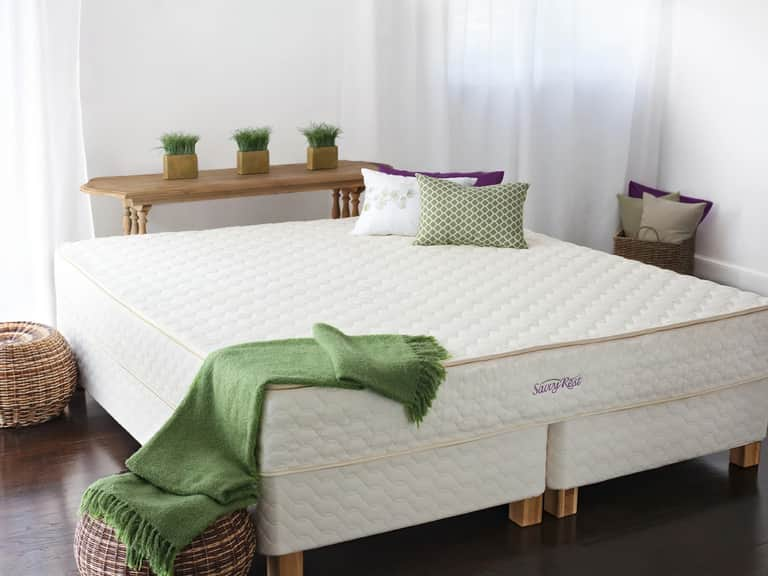
For readers who seek a concrete frame of reference, two representative products illustrate how design and materials converge in real-world options. The Savvy Rest Serenity Latex Mattress embodies the organic ethos, with three customizable latex layers encased in organic cotton and wool. Its modular approach allows sleepers to adjust firmness without swapping the entire mattress, a boon for couples with disparate comfort needs in a small room. The Casper Original Mattress, a more mainstream option, demonstrates how technologically tuned foams and zoned support can deliver consistent comfort at a lower profile, particularly when paired with a slim platform frame and minimal upholstery—even in a smaller footprint.