Pillows · Sleep comfort
Dialing In Pillow Loft: What Side Sleepers Should Know About Naturepedic
For a side sleeper, the small space between shoulder and ear can become a surprisingly consequential piece of real estate. Pillow loft—the height of a pillow under the head—helps fill that space. Too much or too little may leave the neck feeling awkwardly tilted. An adjustable pillow offers a way to experiment, but the useful adjustment is not necessarily the most dramatic one. It is the one that feels comfortable, holds its shape, and suits the bed you actually sleep in.
The quiet geometry of side sleeping
Side sleeping creates a simple geometric problem with no single universal answer. The mattress supports the shoulder and the side of the body; the pillow supports the head. Between them, the neck needs a comfortable resting position. A pillow that is too low may allow the head to angle down toward the mattress. One that is too high may push it upward. Either can feel wrong in the familiar, hard-to-describe way of waking up and rearranging the bedding before the day has properly begun.
Loft is the pillow’s height when it is supporting your head, not merely the height it has when fluffed on the bed. A soft pillow compresses more than a dense one. A pillow filled with loose material may shift as you settle. And a pillow’s apparent height can change over the course of the night as its fill moves or compacts. So a label such as “high loft” or “low loft” is only a starting point; the pillow’s behavior under your head matters more.
Shoulder width can offer a useful clue. A person with broader shoulders may have more distance to bridge between head and mattress when lying on their side, while someone with narrower shoulders may need less. But shoulder width is not a measuring tape for pillow height. The firmness of the mattress, the shape of the sleeper’s shoulders, and their habitual posture all affect how far the body sinks and how much space remains beneath the head.
That is why the best pillow loft is personal, and why an adjustable pillow can be especially practical. Instead of choosing one fixed height and hoping it works, a sleeper can change the amount of fill and observe the result. The exercise is less like finding a secret setting and more like adjusting a familiar instrument: make a small change, listen to the response, and resist the temptation to turn every knob at once.
What affects the pillow height you need?
Shoulder width and the space beneath the head
When you lie on your side, your shoulder meets the mattress while your head rests above it. The shape and width of the shoulder influence the gap between the mattress and the side of the head. That gap is one reason a pillow that feels ample to a back sleeper may seem inadequate to a side sleeper. It is also why two people of similar height can prefer quite different pillow lofts.
It can help to notice how your head rests when you are settled in your usual side-sleeping position. Does it feel as if it is dipping toward the mattress? Does the pillow seem to push your head up? Or does the head feel comfortably supported without a pronounced tilt? These observations are not a diagnosis, and they do not need to become a nightly audit. They are simply practical clues to consider before changing the fill.
Mattress firmness and sink
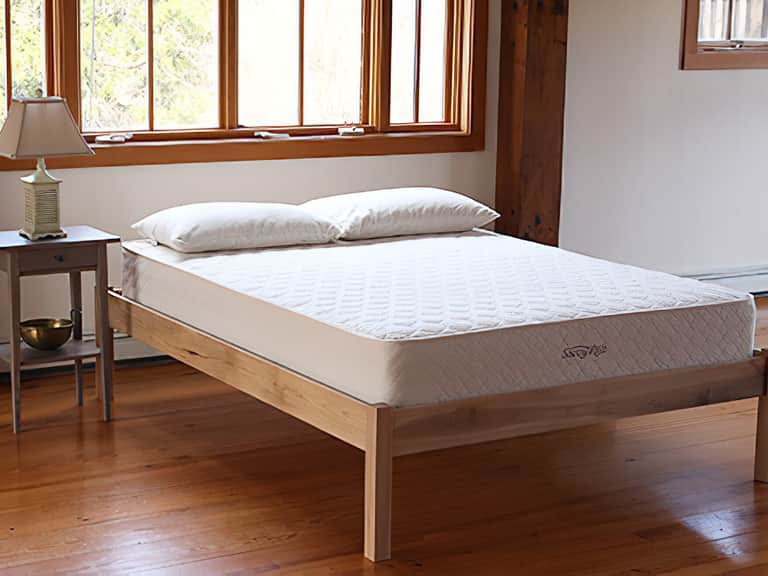
A mattress is part of the pillow equation. On a softer mattress, the shoulder may sink farther into the surface, reducing the distance the pillow needs to bridge. On a firmer mattress, the shoulder may remain higher, leaving a larger gap between the head and the bed. A pillow that felt comfortable after a change of mattress—or even after adding a topper—may no longer feel quite right.
This is one reason to evaluate loft on the bed you use most, rather than making a judgment while standing in a shop or pressing the pillow flat with your hand. Your mattress, bedding layers, and sleeping position together create the conditions the pillow will meet every night. The pillow is not an isolated object; it is a small part of a larger arrangement.
Sleep posture and movement
Some people remain on their side for much of the night; others move between side, back, and stomach. If you change positions, a very high or very firm pillow may feel noticeably different when you turn onto your back. A setting that works for one position may not feel equally comfortable in another. It can be useful to think about the position in which you fall asleep and the positions in which you commonly wake, without expecting a pillow to control where your body goes.
Personal comfort counts, too. One sleeper may prefer a softly yielding surface; another may want the head to feel more securely held. Loft and firmness are related, but they are not the same thing. A pillow can be lofty yet compress readily, or modest in height yet feel dense. Consider how the fill behaves, not just how much of it there is.
An adjustable shredded-latex design
The Naturepedic Organic Side Sleeper Pillow is designed with adjustable shredded-latex fill. Its interior can be accessed so that a sleeper can add or remove material to tailor the pillow’s loft. Shredded fill behaves differently from a single solid slab: it can be moved and redistributed, and its height can be changed by changing the amount inside.
The pillow is described as having a soft feel, with resilient latex fill intended to remain supportive and breathable. Its cover is organic cotton, and the fill is adjustable. Those characteristics may appeal to sleepers who want to experiment with the pillow’s height rather than commit to a fixed profile. They do not guarantee that it will suit every body or preference, but they make adjustment part of the design rather than an afterthought.
For a side sleeper, the practical question is not whether adjustable fill is inherently better than a fixed pillow. It is whether the ability to alter the height is useful to you. If your pillow feels close to right but slightly too full or too flat, a gradual adjustment may help. If you already know you prefer a particular pillow shape or a very firm, unchanging surface, adjustability may be less important than those preferences.
Before making changes, check the product’s current care and use instructions. The listed guidance for this pillow says it is spot-clean only. It also suggests using a washable pillow protector if you want a barrier against spills or dust. Following the manufacturer’s instructions matters: latex fill should not be treated like ordinary washable fiberfill, and washing the entire pillow could damage materials or construction.
A measured approach to adjusting pillow loft
The most reliable way to adjust an adjustable pillow is to change it gradually. Removing a large amount of fill at once can turn a slightly-too-tall pillow into a much-too-flat one, leaving you unsure which change caused the new sensation. A slower process makes it easier to compare one setting with another.
- Start with the pillow as supplied. Give it time in your regular sleep setup before making changes, unless it immediately feels uncomfortably high or low. Place it on your usual mattress and use your normal sleeping position.
- Notice the pillow under your head. Pay attention to whether the head seems to tip up or down, whether the fill shifts away from where you need it, and whether the height feels comfortable when you first settle.
- Make a modest adjustment. If the pillow feels too high or too full, remove a small amount of fill. If it feels too low, check whether the fill has become uneven and redistribute it before deciding that more is needed. Follow the product instructions when opening or handling the fill.
- Keep the conditions consistent. Try the changed pillow with the same mattress, sleeping position, and usual bedding. Changing several parts of the sleep setup at once makes it harder to judge what helped.
- Give the change a fair trial. A single moment of comfort—or discomfort—may not tell the whole story. Notice how the pillow feels across several nights, while remembering that comfort is subjective and can vary.
- Keep any removed fill clean and safe. Store it only as the manufacturer recommends. If the pillow includes an inner enclosure or specific handling directions, use them rather than improvising.
There is no need to pursue an exact number of inches as if pillow loft were a prescription. Your goal is a comfortable resting position and a pillow that stays usable through the night. If a change leaves you uncertain, pause before making another. The advantage of an adjustable pillow is the ability to experiment; the disadvantage, if one can call it that, is the temptation to experiment endlessly.
Signs the loft may need reconsideration
A pillow that feels too high may seem to hold the head above the shoulder rather than letting it settle naturally. One that feels too low may seem to leave the head sinking toward the mattress. You might also find yourself folding or bunching the pillow, pushing it into a new shape, or moving it repeatedly during the night. These habits are not proof of a particular problem, but they can prompt a useful question: does the pillow’s height suit the way I sleep?
Notice whether the pillow feels different from the moment you lie down to the moment you wake. Loose fill can move, and a surface that seems comfortable at first may not feel consistent if the material gathers or spreads unevenly. With shredded fill, occasionally redistributing the material may be worth trying before changing the total amount. How often this is useful depends on the pillow and the sleeper.
It is also worth separating pillow height from broader discomfort. Neck or shoulder pain can have many causes, and a pillow adjustment may not address them. Persistent, severe, or worsening pain deserves attention from an appropriate health professional. A pillow guide can help with a household decision; it cannot identify the cause of a symptom or promise a medical result.
In the same spirit, marketing terms such as “side sleeper” should be treated as guidance rather than a commandment. People sleep in individual ways. A pillow made with side sleeping in mind may offer a starting point, but the deciding evidence is how its shape, fill, and height feel in your own sleep environment.
Care, protectors, and the life of the pillow
Pillow care is easy to overlook until the pillow needs it. The Naturepedic Organic Side Sleeper Pillow is listed as spot-clean only, so its care instructions should guide any cleaning. Avoid assuming that a removable-looking cover means the fill can be washed. If you want a washable layer between the pillow and everyday use, a pillow protector can help shield against ordinary grime and spills; confirm that its dimensions and fit are appropriate.
Latex also has particular handling needs. The product guidance advises keeping latex away from ultraviolet light, which can degrade it, and not washing the latex itself. Airing out bedding in sunlight is a familiar household ritual, but it is not appropriate for every material. When care instructions differ from habit, the label deserves the final word.
Adjustable fill can make a pillow more adaptable, but it also means that handling the interior should be done carefully. Work in a way that keeps the fill contained, avoid exposing it to dirt or excess moisture, and return the pillow to its intended construction after adjustment. If the pillow’s instructions specify a particular method, follow that rather than treating the opening as an invitation to improvise.
For people concerned about dust or accidental spills, a protector may be a sensible companion. It can also make routine care simpler, since a protector is typically easier to launder than a pillow containing latex. Check the protector’s washing instructions and allow all layers to dry as directed. A clean, dry sleep surface is more useful than an ambitious wash that the materials were never meant to withstand.
A simple pillow-loft checklist
Before settling on a setting, ask a few grounded questions. You need not answer them all at once; the point is to pay attention to the conditions that shape comfort.
- Do I usually fall asleep on my side, and do I tend to remain there?
- Does my shoulder sink deeply into the mattress, or does the surface feel comparatively firm?
- Does the pillow seem to push my head upward, or does it leave my head sinking toward the bed?
- Is the fill evenly distributed, or has it shifted to one part of the pillow?
- Have I changed my mattress, topper, or usual sleeping position recently?
- Have I followed the pillow’s specific instructions for adjustment and care?
These questions can turn a vague sense of “this pillow is not quite right” into a manageable experiment. They also help prevent a common mistake: blaming the pillow for a change in the mattress, the sleeping position, or the bed’s overall feel. When only one variable changes at a time, the result is easier to understand.
The art of stopping at comfortable
There is a peculiar modern impulse to optimize the bedroom down to the last layer: the perfect sheet, the ideal temperature, the precise pillow height. But a pillow is not a machine with a hidden setting that, once discovered, settles every night into perfection. It is a soft object in contact with a changing body. The practical achievement is smaller, and often more satisfying: finding a height that feels comfortable enough, then allowing it to do its quiet work.
For side sleepers, shoulder width, mattress firmness, and posture are helpful clues, not a formula. The Naturepedic Organic Side Sleeper Pillow’s adjustable shredded-latex fill allows sleepers to modify loft in small increments, while its care directions set clear limits on cleaning and exposure. Start with the pillow as supplied, notice how it feels, and adjust only when you have a reason. A modest change, given time, is usually more informative than a wholesale reinvention.
In the end, the pillow’s most useful measurement may be neither its height nor its label, but the way it allows you to settle without fuss. That is not a scientific instrument, and it is not a promise of pain relief. It is simply the ordinary, meaningful test of a sleep surface: whether it feels like somewhere you can rest.